

Official buyers are moving fast. Central banks have doubled their gold purchasing pace to an average of 1000 tonnes annually over the past four years. This rate is double that of the previous decade. The shift marks a move from passive holding to active monetary asset management. It signals a structural change in global reserves rather than a temporary spike.
Sanctions, inflation and credit risk drive the rush. Reserve managers are looking away from paper currencies toward bullion as a hedge against geopolitical friction and currency devaluation. Gold is becoming a critical store of value that sits outside the traditional banking system. Buyers want assets that cannot be frozen or easily adjusted by foreign policy. That part is new.
A World Gold Council survey of 76 central banks shows how wide this trend runs. The data indicates that 89 percent of respondents expect global holdings to rise over the next 12 months, with 45 percent explicitly planning to add to their own reserves. This consensus among official sector buyers suggests demand is broad-based and not limited to a few isolated nations. Expectations point to sustained net inflows into vaults.
This structural demand creates a deeper support base for prices that persists even when high Western interest rates deter private investors. While individual speculators may shy away from gold when cash yields are attractive, official buyers operate on different timelines and motivations. Their continued accumulation provides a floor under the market, absorbing supply that might otherwise push prices lower during periods of tight monetary policy in developed economies.
As MCO noted on July 20, 2026, this fundamental backdrop plays out against a specific technical setup where gold is testing its first resistance zone. The recovery remains corrective so far, leaving the preferred bearish scenario unchanged. In that view, as long as price trades within the 4000 dollars to 4100 dollars resistance zone and fails to break above it, the outlook favors one more move lower. A sustained break above 4100 dollars would increase the probability of a substantial low forming, but until then, the preferred count suggests another decline is still on the table despite the strong central bank buying. Not a breakout yet.
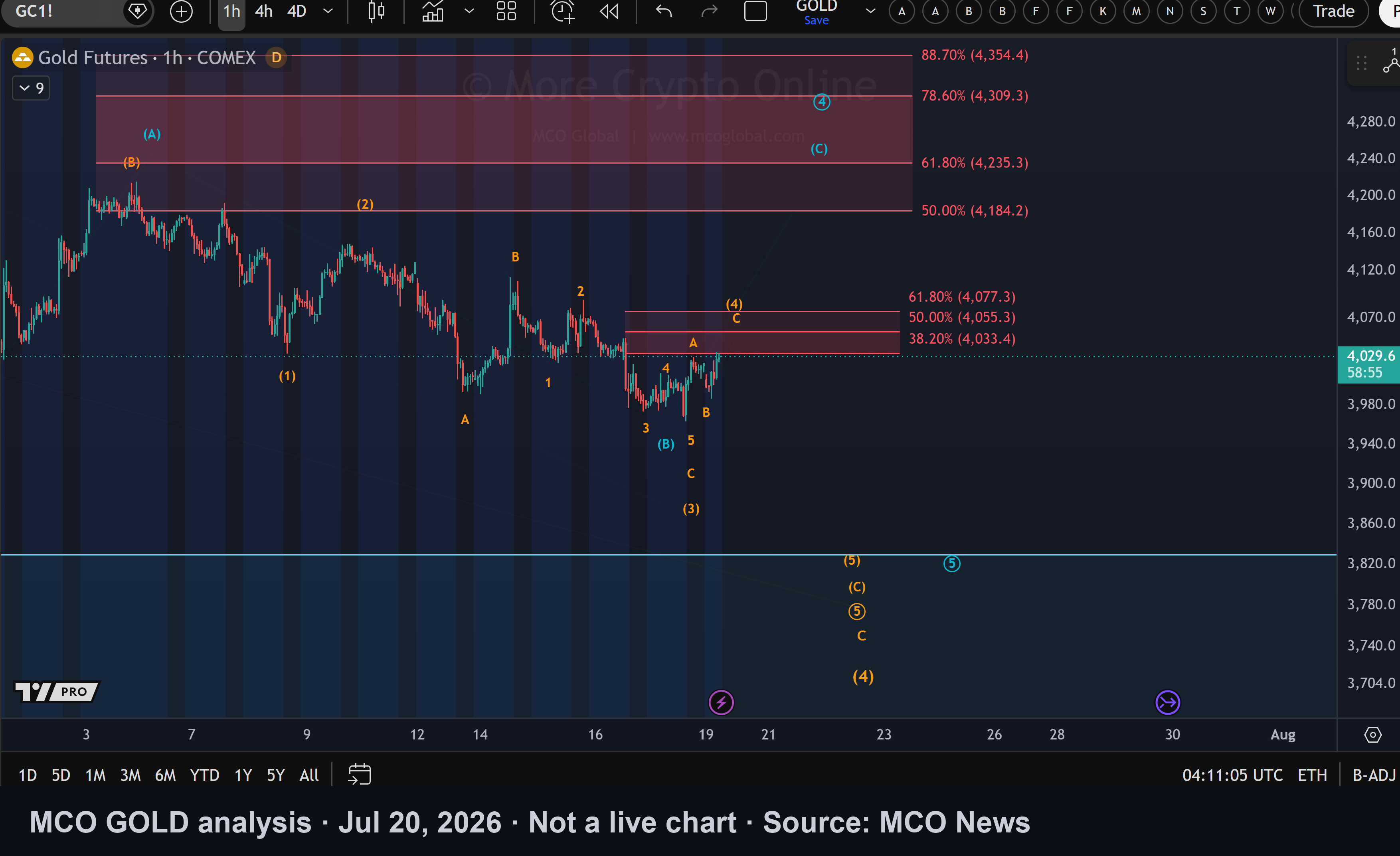
The ultimate test for producers remains converting these higher prices and structural demand into actual output and cash flow. They must navigate rising political risks and operating costs while capitalizing on this unique window of official sector support. The market now balances deep institutional demand against the technical reality that the price has not yet confirmed a sustained breakout above its current range. A break above 4100 dollars would be the signal that the structural bid has finally overcome the short-term resistance. Watch for that level to hold or fail.