

Ship traffic through the Strait of Hormuz has dropped to near zero. The world's busiest oil route is effectively shut down as a US naval blockade tightens around Iran. Tehran says it will keep the chokepoint closed until Washington accepts its terms, turning a diplomatic dispute into an active physical barrier.
This move shifts from pressure to enforcement. Recent reports confirm that the United States has launched fresh military strikes against Iranian targets and intercepted an oil tanker trying to break the blockade. The region is no longer just watching tensions rise; it is seeing direct action designed to stop flow at the source.
US forces are engaging vessels trying to transit without authorization while striking land-based infrastructure to degrade command capabilities. Iran has responded by declaring the waterway closed indefinitely, creating a situation where military force enforces the shutdown rather than just sanctions. The blockade relies on active interdiction and targeted airstrikes to hold the line.
Global markets are reacting with immediate volatility as crude oil supply faces a severe threat. The plunge in traffic has triggered fears of an energy shock, pushing futures higher and forcing traders to price in a prolonged disruption. This potential gap could ripple through global inflation forecasts and economic growth projections almost instantly.
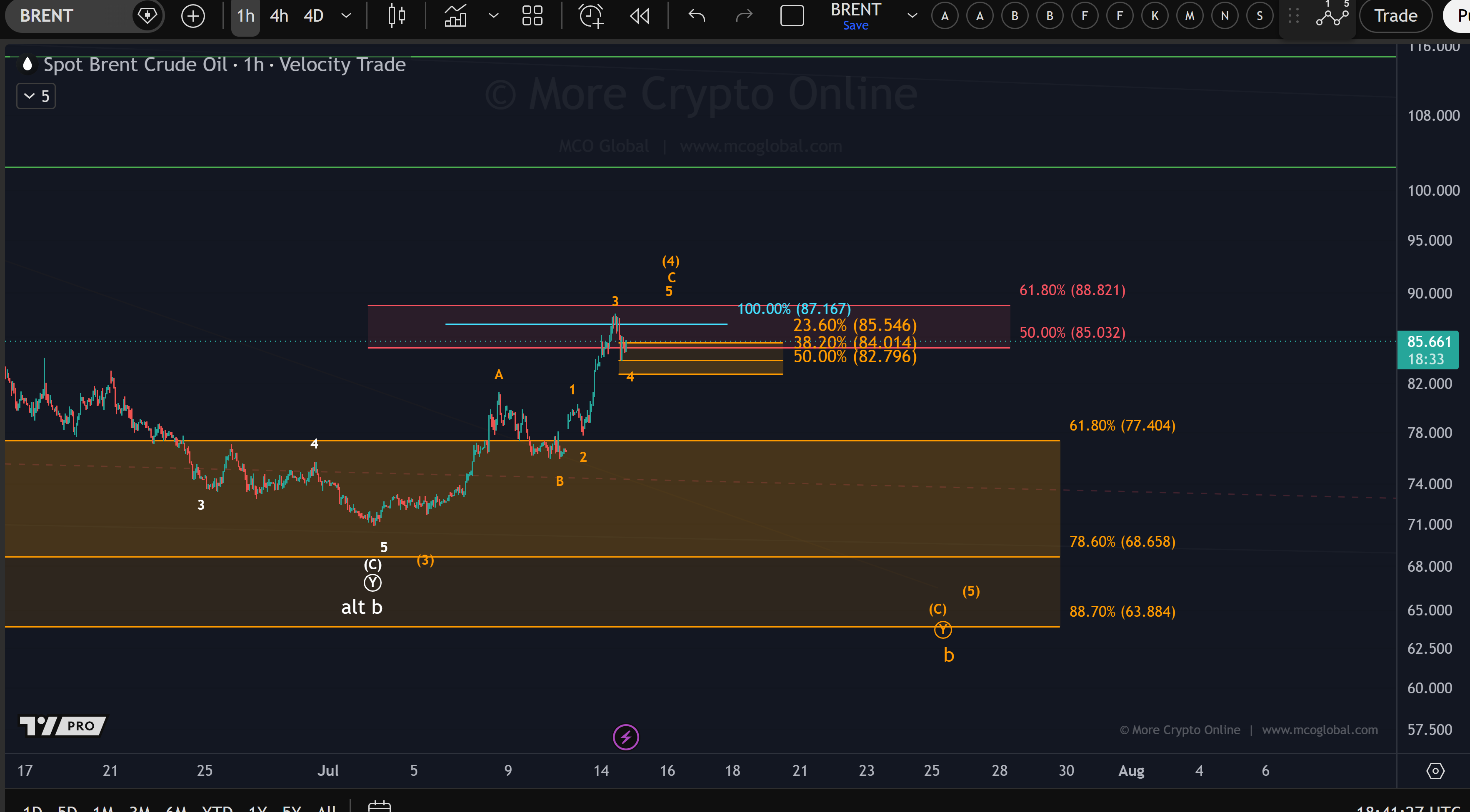
A sustained closure would cut off a massive share of global oil consumption, likely triggering a rapid spike in prices and potentially dragging the economy into recession. As MCO noted on July 14, 2026, Brent has reached its preferred upside target after reacting from the support zone around 83 to 86 dollars. While the recovery appears corrective and the broader downtrend may not be over, a sustained move above 89 dollars would increase the probability of a more bullish structure developing. The market is watching closely.
History shows chokepoints are rarely closed permanently without significant escalation or negotiation, yet this situation remains fluid. A single miscalculation could force rapid de-escalation through backchannel talks or trigger an all-out regional war that expands far beyond the strait. Watch for any sign of backchannel talks or further military strikes that would change the picture.